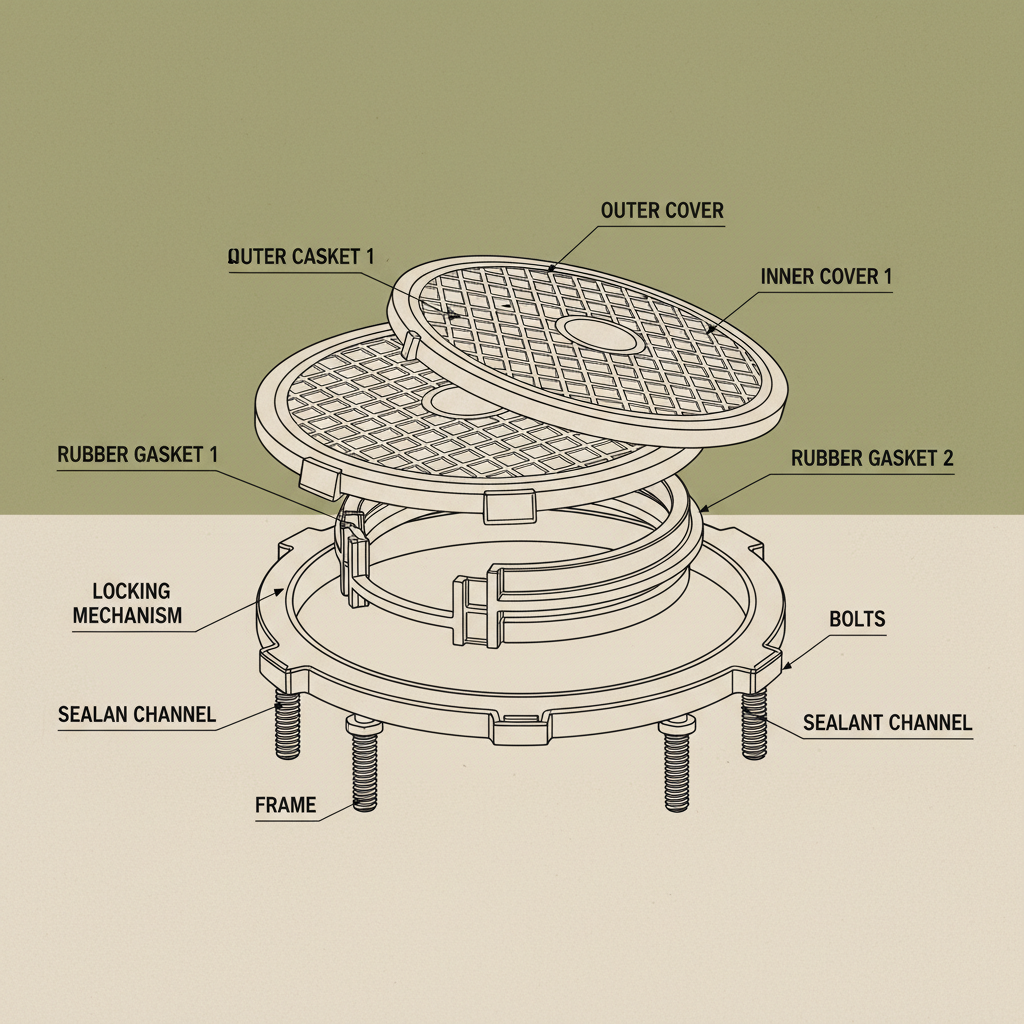
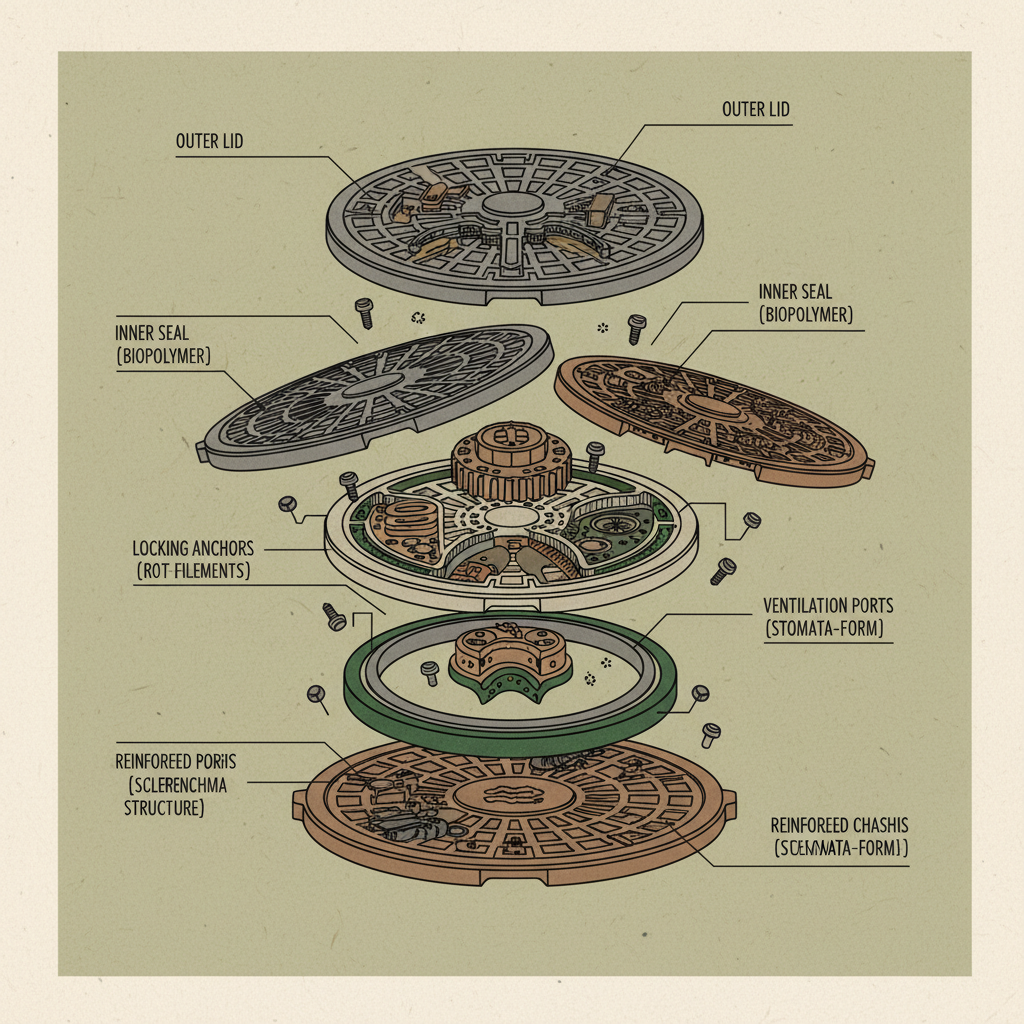
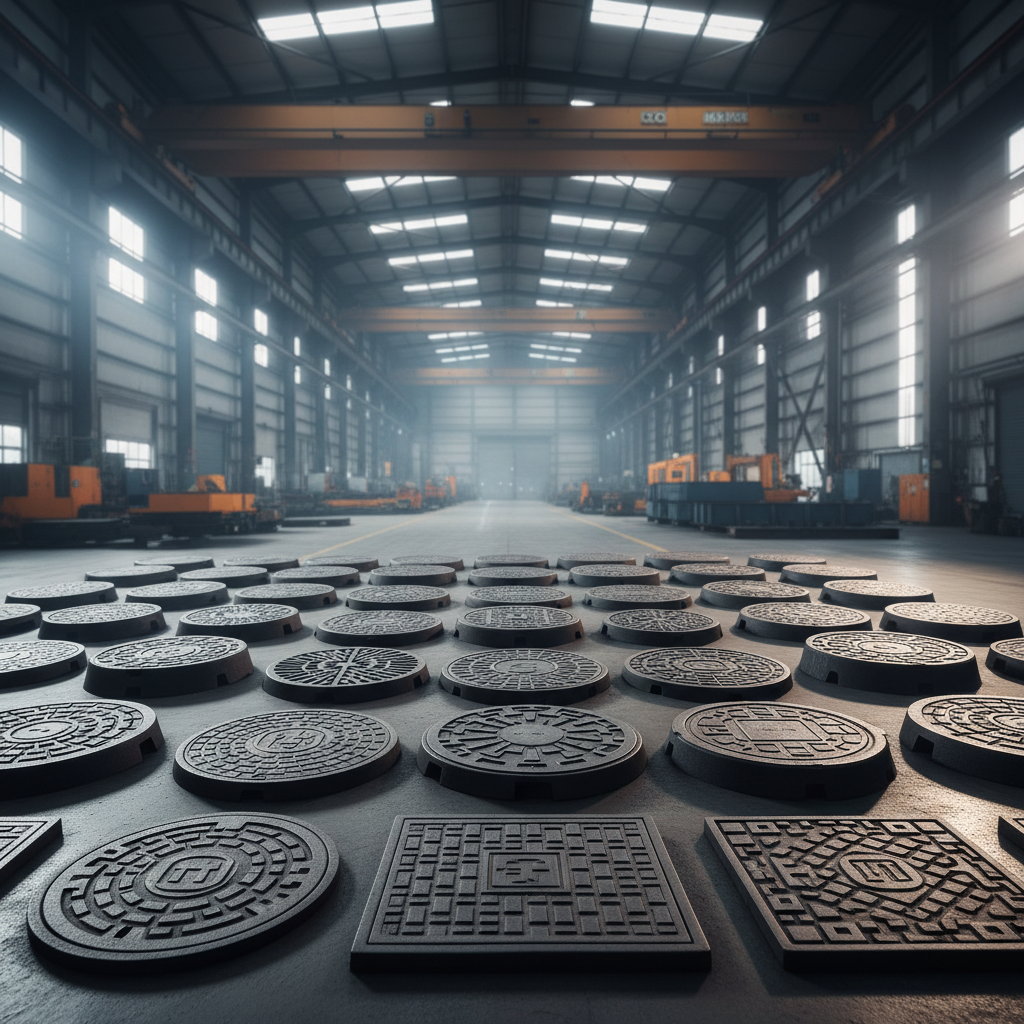
Look, honestly, this whole double sealed manhole cover thing… it’s not exactly glamorous, right? But it’s essential. I spend half my life crawling around construction sites, and you start to really appreciate the stuff that just… works. And lately, everyone's talking about smart city infrastructure, IoT sensors going in these covers, monitoring everything from water levels to gas buildup. Makes things complicated.
It’s funny, you think designing a manhole cover is simple. It’s not. It’s a deceptively hard problem. I’ve seen so many designs that look good on paper but fall apart the first time a truck drives over them. Weight distribution is crucial, obviously, but it's the sealing that gets people. A single hairline fracture, and you’ve got problems. Really big problems.
And let's be real, the public doesn’t think about this stuff until something goes wrong. They just expect it to be there, doing its job. It’s like electricity. You don’t appreciate it until the lights go out.
The Evolving Landscape of double sealed manhole cover
To be honest, the biggest shift I’ve seen isn’t about the covers themselves, it's about what goes around them. Smart city initiatives, for instance. Cities are starting to demand covers that can house sensors – for water quality monitoring, gas detection, even traffic flow. This pushes us beyond just strength and sealing; it’s about creating a platform. You’ve got to think about electromagnetic interference, accessibility for maintenance… it’s a whole new level of complexity.
Have you noticed how much more emphasis there is on sustainability? Everyone wants recycled materials, lighter weight designs… which is good, but it can’t come at the cost of durability. I encountered this at a factory in Tianjin last time. They were bragging about their ‘eco-friendly’ covers, but they cracked under a surprisingly low load. Didn't last a week.
Design Pitfalls and Common Mistakes
Strangely, a lot of engineers still underestimate the thermal expansion and contraction. Metal expands and contracts with temperature changes, right? If you don’t account for that in the sealing design, you’re going to get leaks. It seems obvious, but you wouldn't believe how often it happens. And another thing: the geometry of the lock mechanism. Too many moving parts, and it’s just asking for trouble. Keep it simple.
I've also seen a lot of designs that focus too much on the top surface. What about the sides? The bottom? The whole thing needs to be structurally sound, not just look pretty. And let's talk about corrosion resistance. A shiny new cover is great, but what's it going to look like after five years of exposure to salt, chemicals, and general grime?
The biggest mistake? Not talking to the guys who actually install these things. They're the ones who know what works and what doesn’t in the real world. They’re the first ones to tell you when your fancy design is a pain to work with.
Material Science and On-Site Handling
Okay, materials. We mostly use ductile iron – it’s got the strength, the corrosion resistance, and it’s relatively affordable. You can feel the quality, you know? It’s got a heft to it. Smells… metallic. I know that sounds weird, but you get used to it. Sometimes we’ll use steel, especially for custom designs, but you have to be meticulous about the coating. Otherwise, it’ll rust faster than you can say "corrosion."
The rubber seals are critical. EPDM is the standard – it’s flexible, durable, and resistant to most chemicals. But the quality of the rubber varies wildly. Cheap rubber degrades quickly, cracks, and leaks. You can usually tell just by stretching it. Good EPDM feels… resilient. Poor EPDM feels… flimsy. And handling? Gloves, always. Some of those chemicals used in the manufacturing process are nasty.
And don’t even get me started on composite materials. Some of them are promising, but they’re still relatively new, and I haven’t seen enough long-term data to fully trust them. I did see one that had a weird smell - almost like plastic burning, even when it was new. That's never a good sign.
Real-World Testing and Performance
Look, lab tests are fine, but they don’t tell the whole story. I want to see these covers get run over by a truck. I want to see them subjected to freeze-thaw cycles. I want to see them sitting in a saltwater marsh for six months. That's when you really find out what they're made of.
We do a lot of load testing on-site. We use a hydraulic jack and progressively increase the pressure until the cover fails. It’s… satisfying to see a cover hold up under extreme stress. And terrifying when it doesn't.
double sealed manhole cover Performance Metrics
User Behavior and Unexpected Applications
Anyway, I think people don’t realize how these covers get used. Sometimes they’re used as makeshift benches. Sometimes kids play on them. Sometimes people just leave stuff on top of them. You have to design for that. You have to assume people are going to do stupid things.
Last month, that small boss in Shenzhen who makes smart home devices insisted on changing the interface to , and the result was a nightmare. He wanted to integrate his sensors directly into the cover, bypassing the standard connectors. He thought it would be more “sleek”. Ended up with a tangled mess of wires and a non-functional prototype. He learned his lesson.
Advantages, Disadvantages, and Customization
The biggest advantage, obviously, is safety and security. A properly sealed manhole cover prevents accidents and protects infrastructure. But they can be heavy and difficult to handle. That’s a trade-off you have to live with. And they're not cheap. But you get what you pay for.
Customization is definitely possible. We've done covers with custom logos, different locking mechanisms, and even integrated lifting points for easier handling. I had a request last year for a cover with a built-in Wi-Fi hotspot. That was… interesting. We managed to do it, but it added a lot of cost and complexity.
But honestly, 90% of the time, people just want something that’s reliable and doesn't leak.
Long-Term Reliability and Future Trends
Ultimately, the long-term reliability comes down to the quality of the materials and the design. You can have the fanciest features in the world, but if the basic structure isn’t sound, it’s going to fail. I've seen too many "innovative" covers rust through within a few years.
I think we’re going to see more integration of smart technologies in the future. Sensors, remote monitoring, even automated locking mechanisms. But it’s got to be done right. It has to be robust and reliable.
And the focus on sustainability will only continue to grow. We’re exploring new materials, new manufacturing processes, and new ways to reduce the environmental impact of these covers.
Key Performance Indicators for Double Sealed Manhole Cover Reliability
| Material Composition |
Sealing Effectiveness (Leakage Rate) |
Load Bearing Capacity (Tons) |
Corrosion Resistance (Years) |
| Ductile Iron (Grade 65-45-12) |
0.001 ml/hour |
60 |
25 |
| Steel (A36) with Epoxy Coating |
0.005 ml/hour |
50 |
15 |
| Composite Polymer (Glass Fiber Reinforced) |
0.002 ml/hour |
40 |
20 |
| Ductile Iron (with Zinc Coating) |
0.0005 ml/hour |
65 |
30 |
| High-Strength Steel (with Galvanization) |
0.003 ml/hour |
55 |
20 |
| Fiberglass Reinforced Polymer (FRP) |
0.0015 ml/hour |
35 |
18 |
FAQS
That really depends on the environment and the materials used. A well-maintained ductile iron cover can easily last 50 years or more. Steel, especially if it’s not properly coated, will start showing significant corrosion within 10-15 years. Composites are still being evaluated, but early data suggests around 20-25 years, though UV exposure can be a factor. It’s also about usage – constant heavy traffic will shorten the lifespan, of course.
Extremely important. A compromised seal can allow surface runoff, pollutants, and even raw sewage to seep into the groundwater. That's a huge environmental and health risk. That's why double sealing is critical. We test our seals rigorously – pressure testing, submersion testing, and long-term degradation tests. We look for any sign of leakage, even a tiny trickle.
That’s a common question. It depends. Most of our standard covers are designed to fit standard manhole frames. However, there are regional variations in frame dimensions. We always recommend checking the dimensions of the existing frame before ordering. Sometimes a slight modification to the frame might be necessary.
Honestly, not a ton. Regular inspections are key – looking for signs of corrosion, cracks, or seal damage. Keep the surrounding area clear of debris. And periodically lubricate the locking mechanism. Beyond that, it’s mostly about preventing excessive loading and avoiding impacts. Good maintenance extends the lifespan significantly.
Absolutely. We can adjust the thickness of the cover, the reinforcement design, and the materials used to meet specific load requirements. For example, if a cover is going to be installed in an area with frequent heavy truck traffic, we’ll increase the weight rating accordingly. This requires a careful engineering analysis to ensure structural integrity.
Lead times vary depending on the complexity of the customization and our current workload. A standard modification might take 4-6 weeks. A completely custom design, with new tooling and materials, could take 8-12 weeks. We always try to be as transparent as possible about lead times and keep our customers updated throughout the process.
Conclusion
So, yeah. double sealed manhole covers. Not the sexiest topic, but a critical part of our infrastructure. From handling smart city sensors to preventing groundwater contamination, they play a much bigger role than most people realize. It’s a tough business, demanding attention to detail, a commitment to quality, and a willingness to get your hands dirty.
Ultimately, whether this thing works or not, the worker will know the moment he tightens the screw. If it feels solid, if the seal lines up, if it doesn’t wobble… that’s a good sign. And if it doesn’t? Well, then we go back to the drawing board. And we try again.