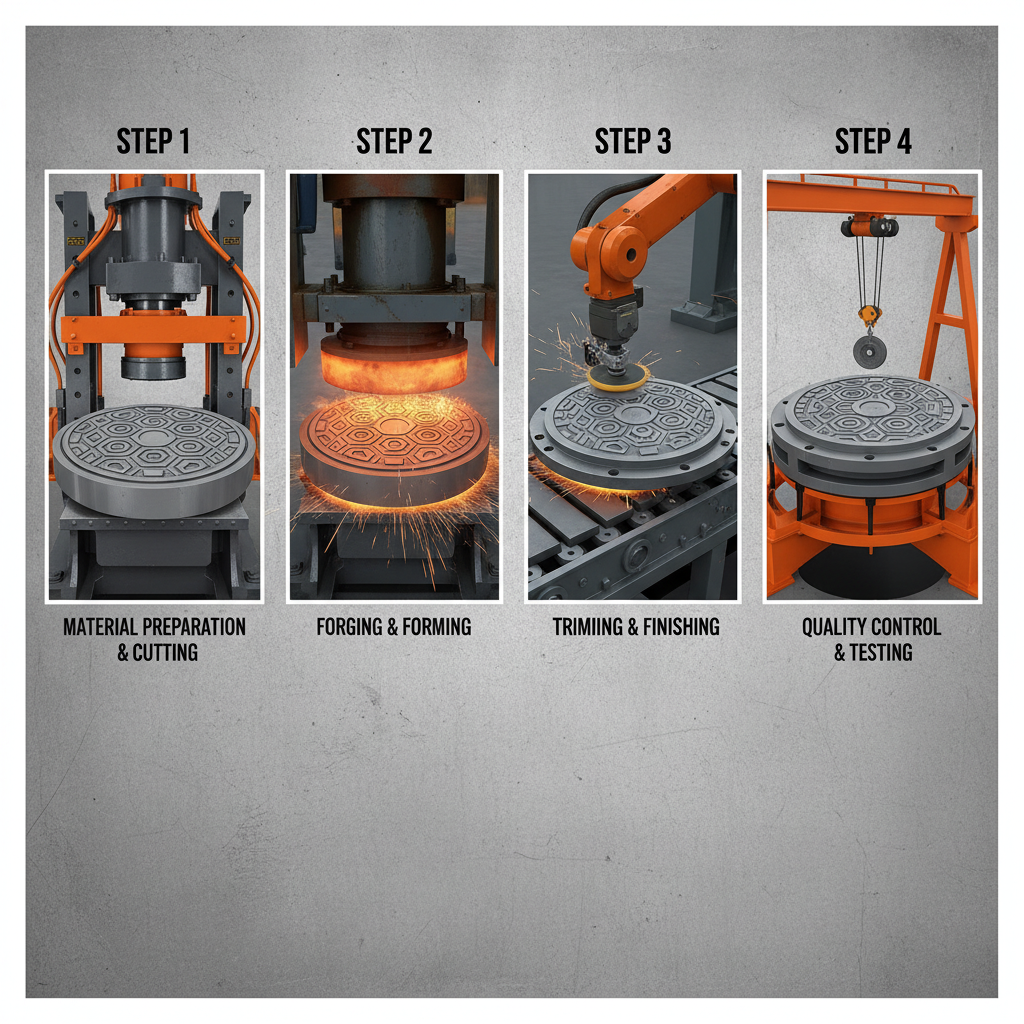
Urban waste management relies heavily on the durability and structural integrity of the containment systems installed across public spaces. While many perceive waste bins as simple utility items, the industrial requirements for high-traffic areas demand materials that can withstand constant mechanical stress and environmental corrosion.
Selecting a reliable dustbin company involves more than comparing prices; it requires an analysis of casting quality, load-bearing certifications, and material resilience. In metal fabrication, particularly within the casting and machining sector, the transition toward ductile iron has redefined how these facilities are engineered for longevity.
This analysis explores the technical benchmarks of modern metal waste and drainage facilities, examining the critical relationship between material specifications and operational lifespans in urban infrastructure.

The Evolution of Casting in Public Utilities

Public utility hardware, from gully grates to park facilities, has evolved from simple heavy-cast iron to precision-engineered alloys. The primary driver of this change has been the need for a higher strength-to-weight ratio, reducing the physical burden during installation while increasing the capacity to handle heavy vehicle loads.
Modern fabrication focuses on the molecular structure of the iron. By treating the iron before the casting process, manufacturers can create a material that bends rather than snaps under extreme pressure, a critical requirement for any professional dustbin company or infrastructure provider.
Engineering Standards for Load-Bearing Metalwork
Adherence to international standards is the only way to ensure safety in public areas. The EN124 standard, for instance, classifies load-bearing capacities into categories such as A15 for pedestrian areas, B125 for cars and light vehicles, and C250 to F900 for heavy-duty industrial or emergency vehicle access.
When analyzing components like gully grates, the "clear opening" and "cover diameter" are not just dimensions but critical factors in drainage efficiency and structural stability. A gap too wide can be a safety hazard, while a frame too small can lead to premature failure of the surrounding concrete.
For high-load zones where fire trucks or heavy lorries frequently pass, the industry recommends ductile iron over standard cast iron. This is because ductile iron provides the necessary impact resistance to prevent catastrophic cracking under sudden, high-intensity pressure spikes.
Material Science: Ductile Iron vs. Traditional Cast Iron
The fundamental difference between traditional grey iron and ductile iron (such as GGG500-7) lies in the graphite structure. Grey iron contains graphite flakes that act as internal stress concentrators, making the material brittle. Ductile iron, through a magnesium treatment process, forms graphite nodules.
The transition to GGG500-7 ductile iron increases impact resistance and tensile strength, allowing metal facilities to withstand significant deformation without fracturing, which is essential for safety in high-traffic carriageways.
This material advantage extends to corrosion resistance. In environments exposed to road salts and wastewater, ductile iron treated with specialized coatings offers a significantly longer service life, reducing the frequency of costly municipal replacements.
Quantifying Performance in Urban Settings
Evaluating the effectiveness of urban metal installations requires a multi-dimensional approach. Factors such as drainage rate, ease of installation, and anti-theft capabilities must be balanced against the loading capacity required for the specific zone.
For example, a park facility requires high aesthetic value and corrosion resistance but lower load capacity than a manhole cover located on a main road. The following index illustrates the relative priority of these factors across different installation types.
Figure 2. Relative Requirement Index by Facility Type
Practical Application Scenarios for Metal Facilities
In a typical industrial setting, the deployment of gully grates and manhole covers must account for the chemical composition of runoff. For areas handling industrial wastewater, GGG500-7 ductile iron is preferred because it can be combined with anti-corrosive coatings that prevent the metal from pitting and weakening over time.
Similarly, in public parks, the integration of "Park Facilities" requires a focus on safety and accessibility. Here, the design shifts from pure load-bearing capacity to ergonomic shapes and non-slip surfaces, ensuring that waste containment and drainage systems do not become hazards for pedestrians or children.
The Shift Toward Modular and Anti-Theft Designs
One of the most significant challenges for municipal managers is the theft of high-value metal covers. To combat this, professional manufacturers have introduced hinge connections and locking mechanisms that secure the cover to the frame without impeding necessary access for maintenance teams.
Modularity is also becoming a standard. By standardizing sizes—such as the 400x400mm or 600x600mm formats—cities can maintain a smaller inventory of spare parts, speeding up the repair process when a component is damaged by extreme weather or accidents.
These innovations, combined with a lighter weight for easier installation, reduce the total cost of ownership. When a dustbin company provides facilities that are both secure and easy to maintain, the operational efficiency of urban sanitation increases significantly.
Selection Framework for Infrastructure Procurement
Procuring metal infrastructure requires a rigorous comparison of technical specifications against the actual environmental demands. A common error is over-specifying load capacity (e.g., using an F900 cover in a pedestrian zone), which leads to unnecessary costs and excessive weight for installation.
Conversely, under-specifying can lead to structural collapse. The decision process should begin with a site analysis to determine the highest possible vehicle weight that will traverse the area, followed by a material selection based on the corrosivity of the environment.
Hebei Yongqian Trading Co., Ltd. provides a clear example of this engineering approach by offering specific GGG500-7 ductile iron solutions tailored to EN124 classes, ensuring that each product—from manhole steps to surface boxes—matches its intended application.
| Application Zone | Recommended Class | Material Choice | Key Performance Factor |
|---|---|---|---|
| Pedestrian Walkway | EN124 A15 | Cast Iron/Steel | Anti-slip surface |
| Residential Driveway | EN124 B125 | Ductile Iron | Weight-to-strength ratio |
| Commercial Parking | EN124 C250 | Ductile Iron | Impact resistance |
| Main Urban Road | EN124 D400 | Ductile Iron | High fatigue strength |
| Industrial Loading Bay | EN124 E600 | Ductile Iron | Heavy axle load support |
| Airport Runway | EN124 F900 | High-Grade Ductile | Extreme load bearing |
Questions & Answers
The primary advantage is the material's ductility and tensile strength. Unlike grey iron, which is brittle and prone to cracking under sudden impact, ductile iron (such as GGG500-7) contains spherical graphite nodules that allow the metal to absorb energy and deform slightly without fracturing. This makes it far safer for areas subject to heavy vehicle traffic and high-impact loads.
Determination depends on the anticipated load. Class A15 is for pedestrians and cyclists. B125 is suitable for footways and car parks. C250 is for gully grates in carriageways. D400 is the standard for all traffic including main roads. E600 and F900 are reserved for high-stress areas like docks, airports, and industrial loading zones. Always select a class that meets or slightly exceeds the maximum expected axle load.
Yes, anti-theft functionality is a critical requirement for modern urban infrastructure. This is typically achieved through integrated hinge connections that permanently link the cover to the frame, or through specialized locking bolts that require specific tools to open. These features prevent the removal of covers for scrap metal value while ensuring maintenance crews can still access the underground utilities.
While lifespan varies by environment, a high-quality ductile iron grate treated with protective coatings generally lasts significantly longer than standard cast iron. In moderate urban conditions, they can serve for several decades. In highly corrosive environments (high salinity or industrial acids), the lifespan depends on the maintenance of the coating, but the base material remains superior in resisting structural degradation compared to cheaper alternatives.
The clear opening represents the actual area through which water can flow into the drainage system. If the clear opening is too small relative to the cover size, it can lead to surface flooding during heavy rain. Conversely, if the gaps are too large, it can pose a safety risk to pedestrians (e.g., high heels or bicycle tires getting stuck). Engineering the perfect ratio is key to combining safety with hydraulic efficiency.
Yes, professional manufacturers typically offer customization options including custom logos, specific patterns for better grip, and specialized coatings to match the urban aesthetic. Since these are often cast or fabricated from steel and iron, the design can be adjusted during the molding or welding phase to meet the visual and functional requirements of a specific city or park project.
Final Thoughts
The reliability of urban infrastructure is fundamentally tied to the quality of the materials used in its most basic components. Moving away from brittle cast iron toward precision-engineered ductile iron has allowed cities to build more resilient waste and drainage systems that require less frequent replacement and offer greater public safety.
For procurement officers and engineers, the focus must remain on material certification and the alignment of load-bearing classes with actual site usage. By prioritizing technical standards over initial cost, municipalities can ensure a sustainable and secure environment for both pedestrians and heavy transit.