The modern urban landscape is increasingly relying on specialized perimeter security and traffic management systems to ensure public safety and infrastructure protection. Among these, the deployment of custom bollards has evolved from simple physical barriers to engineered safety components designed to mitigate specific vehicular impact risks.
The challenge for municipal engineers and site developers lies in balancing aesthetic integration with rigorous load-bearing requirements. As urban density increases, the need for tailored solutions that can withstand specific impact forces while adhering to local zoning and safety regulations has become a critical priority for infrastructure procurement.
This analysis explores the technical specifications, material considerations, and engineering frameworks necessary for selecting high-performance perimeter barriers. By understanding the intersection of metallurgy and urban design, stakeholders can optimize the longevity and effectiveness of their site security installations.

Engineering Fundamentals of Perimeter Barriers

The primary objective of any perimeter barrier is the controlled redirection of kinetic energy. For custom bollards, this involves a synergy between the post's material strength and the depth of its foundation.
Engineering these systems requires an understanding of soil bearing capacity and the expected impact velocity of vehicles. A failure in the foundation often leads to "tilting," rendering the barrier ineffective regardless of the post's thickness.
Material Selection and Durability Factors
The choice of material defines the lifecycle and maintenance requirements of the installation. In the metal products industry, particularly within casting and processing, ductile iron and galvanized steel are preferred for their balance of tensile strength and corrosion resistance.
Surface treatments play a critical role in longevity. Bituminous paints and hot-dip galvanization provide a protective layer against oxidation and chemical exposure from road salts, which is essential for barriers located in coastal or heavy-snow regions.
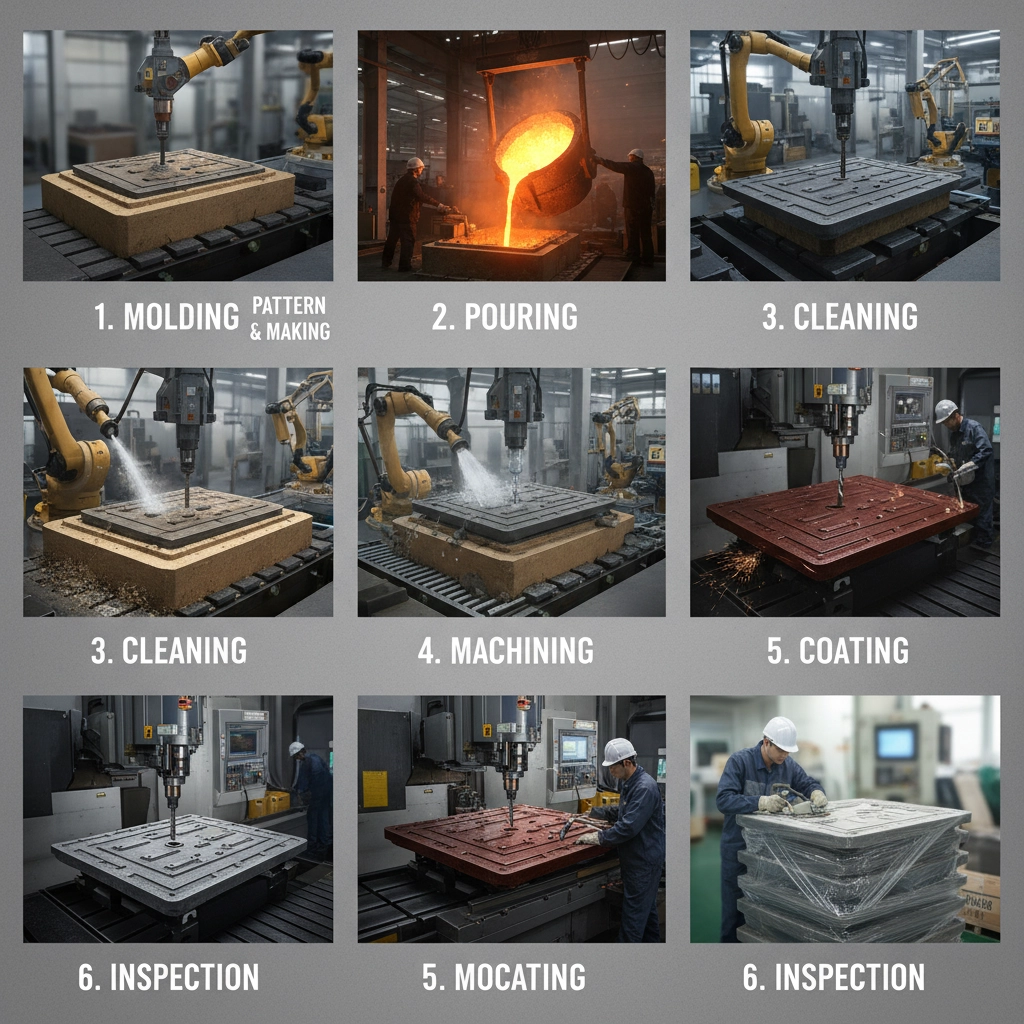
Moreover, the internal structure of the cast metal must be free of voids to ensure consistent load distribution. This is where advanced foundry techniques become vital, ensuring that the final product adheres to strict industrial tolerances.
Impact Dynamics and Structural Integrity
When a vehicle strikes a barrier, the energy is transferred through the post into the ground. The ability of the system to absorb this energy without catastrophic failure depends on the material's elasticity and the geometry of the bollard.
Designers must evaluate the "stopping distance"—the distance a vehicle travels after the initial impact. By customizing the diameter and wall thickness, engineers can tune the barrier to be either rigid (maximum protection) or slightly yielding (reducing vehicle damage in low-speed zones).
Comparative Performance Metrics
Evaluating perimeter security requires a normalized approach to assess different configurations. Rather than relying on a single metric, industry professionals use an engineering rating system that considers impact resistance, installation speed, and environmental durability.
The following data represents a normalized engineering assessment across common barrier configurations, highlighting the trade-offs between cost and protective capacity.
Normalized Engineering Assessment of Barrier Profiles
Deployment Scenarios in Urban Planning
In representative engineering scenarios, barriers are deployed not just for security, but for pedestrian safety and traffic channeling. For instance, in high-traffic commercial zones, custom bollards are often used to delineate sidewalk boundaries from parking lanes, preventing accidental vehicle encroachment.
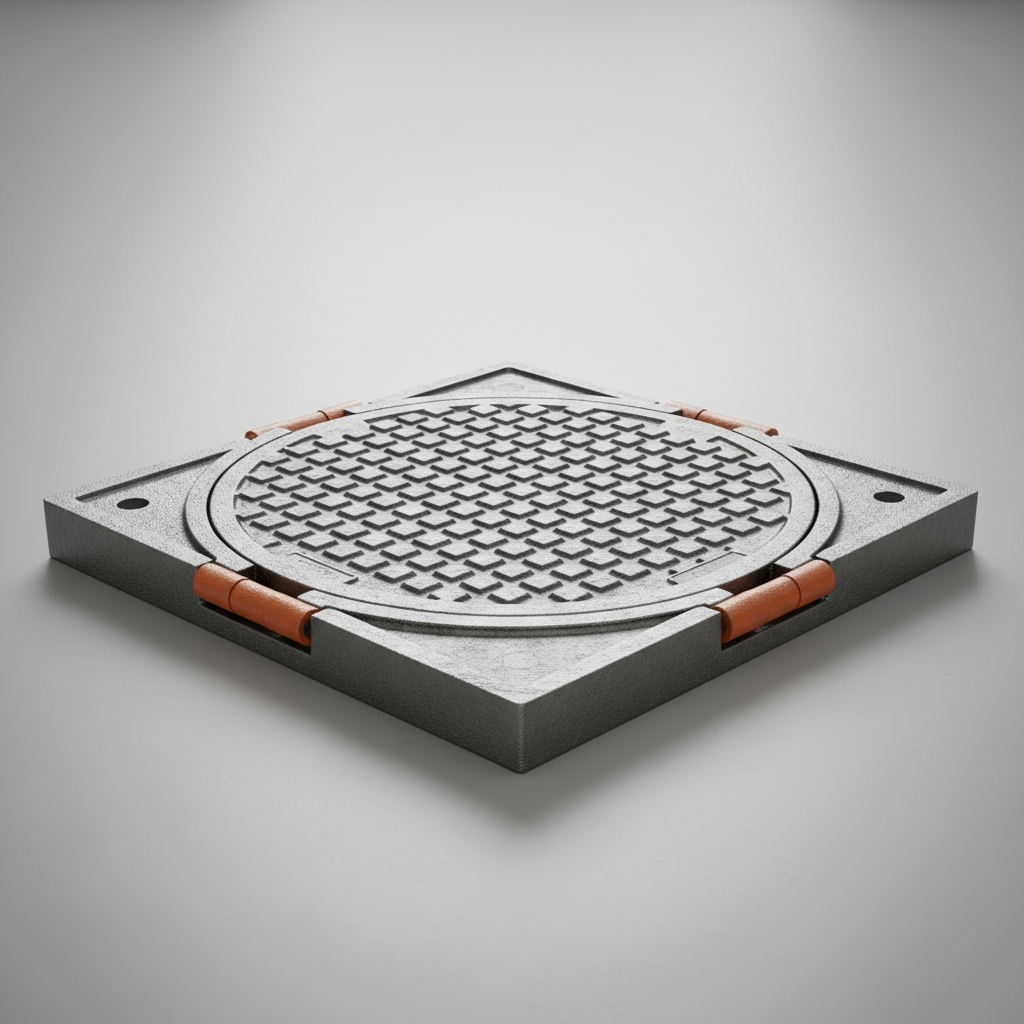
Industrial applications, such as those found in utility grids or refinery entrances, prioritize absolute rigidity and crash-rating certification. In these environments, the integration of barriers with other cast-iron infrastructure, such as manhole covers and valves, ensures a cohesive and durable site layout.
Evolution of Casting and Fabrication
The transition from traditional sand casting to precision molding has allowed for more complex geometries in perimeter security. This shift enables the creation of integrated safety systems that can be customized with specific logos or reflective coatings without compromising the structural integrity of the metal.
Modern fabrication also focuses on the reduction of internal stresses during the cooling process. By controlling the thermal gradient, manufacturers can produce cast components that are less prone to brittle fracture under sudden impact, significantly increasing the reliability of the installation.
Future developments are likely to involve the integration of smart sensors within the bollard structure to detect impacts in real-time, alerting security personnel immediately upon a breach attempt.
Procurement Selection Matrix
Selecting the appropriate barrier requires a systematic comparison of configuration types against the intended application profile. Buyers should avoid a "one size fits all" approach, as over-engineering leads to unnecessary costs, while under-engineering poses a safety risk.
The evaluation process should include a review of material certifications, coating specifications, and the manufacturer's capacity for customized dimensions to fit existing site constraints.
The following matrix provides a decision framework based on common industrial configuration profiles.
| Configuration Type | Primary Specification | Durability Factor | Recommended Use Case |
|---|---|---|---|
| Basic Profile | Lightweight Cast | Standard Galvanized | Pedestrian Guidance |
| Standard Profile | Medium Wall Thickness | Bituminous Coating | Commercial Parking |
| High-Duty Profile | Heavy-Wall Ductile Iron | Hot-Dip Zinc | Industrial Entrances |
| Precision Profile | Toleranced Casting | Powder Coated | Architectural Zones |
| Security Profile | Reinforced Core | Industrial Grade | Critical Infrastructure |
| Industry Baseline | Standard Cast Iron | Asphalt Paint | General Urban Areas |
Technical FAQ
Ductile iron contains nodular graphite, which allows the material to deform slightly under stress rather than fracturing instantly. In the context of impact barriers, this provides significantly higher toughness and tensile strength compared to gray cast iron, making it the superior choice for high-impact zones where structural failure must be avoided.
Coatings such as black asphalt (bituminous paint) or hot-dip galvanization act as a primary barrier against moisture and corrosive agents. Without proper coating, cast metal is susceptible to oxidation, which can compromise the surface integrity and eventually the structural strength of the post, especially in salt-heavy winter environments.
Foundation depth is determined by the expected impact energy (vehicle weight x velocity squared) and the soil's load-bearing capacity. A deeper foundation with a wider base prevents the bollard from leaning or being uprooted during a collision, ensuring that the force is effectively transferred into the earth.
Yes, custom casting allows for modifications in height, diameter, and top-cap design. Additionally, surface finishes can be adjusted via specialized coatings or patterns to align with urban architectural guidelines without sacrificing the protective capabilities of the underlying metal structure.
Verification is typically conducted through a combination of Finite Element Analysis (FEA) during the design phase and physical impact testing on prototypes. Standards like EN124 for related cast components provide a framework for classifying load-bearing capacities, ensuring they meet the required safety grade for the specific installation site.
Maintenance primarily involves periodic inspection of the surface coating for chips or corrosion and checking the base for concrete cracking. Touching up the paint or applying a new protective layer every few years prevents deep oxidation and maintains the professional appearance of the facility's perimeter.
Engineering Summary and Implications
The effective implementation of custom bollards requires a holistic approach that integrates material science, impact physics, and urban planning. By shifting from generic barriers to engineered solutions tailored to specific site risks, organizations can significantly enhance their security posture while minimizing long-term maintenance costs.
For professionals in the casting and metal fabrication sector, the focus must remain on structural consistency and corrosion protection. As urban infrastructure continues to evolve, the synergy between high-strength cast components and precision engineering will remain the cornerstone of public and private asset protection.