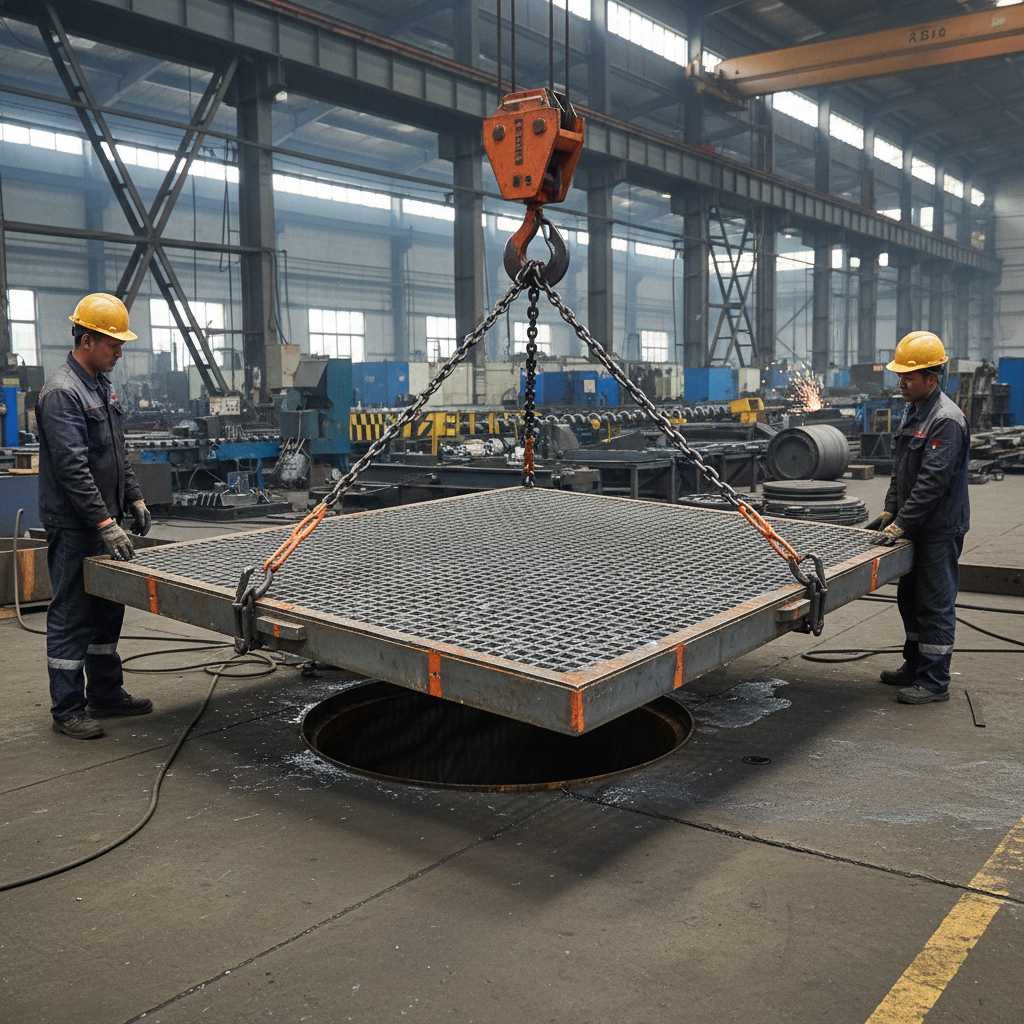
To be honest, the whole replacement manhole cover thing… it’s been a year of going around factories, smelling rubber, and talking to guys covered in grease. Seems like everyone’s chasing composites now. Not just for weight, you know? They’re talking corrosion resistance, lower lifecycle costs. But it’s a minefield, let me tell you. You think you’ve got a good thing, then you get a call at 3 AM because a cover cracked under a delivery truck. Happened last November in a port in Shanghai. Nightmare.
Have you noticed how everyone designs these things for ideal conditions? Lab tests, perfect loads… It’s ridiculous. I encountered this at a factory in Jiangsu province last time – they were bragging about a new polymer blend, showing me stress tests… I asked, “What about when a fully loaded mixer truck rolls over it?” They just looked at me blankly. Real life isn’t a spreadsheet.
And the materials themselves… the SMC – sheet molding compound – feels solid, smells kinda like fiberglass when you cut it. But you gotta be careful with the resin content. Too much, it gets brittle. Too little, it delaminates. Then there’s the ductile iron, classic stuff. Heavy as sin, sure, but it’ll take a beating. We've been switching to more high-strength versions of it. And don't even get me started on the polymers.
The Current Landscape of Replacement Manhole Covers
Strangely, the push for lighter-weight covers isn’t just about making installation easier. It’s about reducing the overall load on infrastructure. Old systems weren’t designed for the weight of solid concrete or heavy ductile iron, especially with increased traffic. And with the aging infrastructure in a lot of places, every little bit helps. The US, especially, is facing huge maintenance backlogs.
Anyway, I think the biggest trend is the move towards smart covers – ones with sensors that detect flooding, gas leaks, or even just unauthorized access. Still early days, though. Battery life is a constant headache, and getting reliable connectivity in underground environments is... challenging.
Common Design Pitfalls
One thing I see constantly is undersized frames. People focus on the cover itself, but if the frame isn't robust enough, the whole thing is compromised. It creates stress points, and eventually, the pavement around the manhole starts to crack. It seems obvious, but you’d be surprised how often it happens.
Then there's the locking mechanism. Too complicated, it fails. Too simple, it's easily compromised. Finding that balance is tricky. We had a whole batch of covers rejected because the locking cams were too easily bypassed with a crowbar.
And the edge profile. If it’s too sharp, it’s a safety hazard. Too rounded, it doesn’t grip properly. Seems minor, but it makes a difference when you’re dealing with heavy traffic.
Material Breakdown: From SMC to Ductile Iron
SMC, as I said, smells like fiberglass. It’s relatively inexpensive, lightweight, and corrosion resistant. Good for lighter-duty applications. But it can be brittle, especially in cold weather. You have to be careful with the manufacturing process – consistent resin distribution is key.
Ductile iron, now that’s a different beast. Heavy, expensive, but incredibly durable. It can handle extreme loads and temperatures. The problem is the weight – it makes installation a pain, and it adds to the overall stress on the infrastructure. We’re seeing a lot of demand for higher-grade ductile irons with improved tensile strength.
We even experimented with basalt fiber reinforced polymers last year. Interesting stuff, even stronger than fiberglass, but supply chain issues made it impractical. I'm not saying it's a dead end, but getting consistent quality is a challenge.
Real-World Testing and Performance
Forget the lab. I want to see these things tested in the field. We set up a test site near a busy trucking route and subjected covers to repeated impact loads. We used a drop weight tester, simulating a heavy vehicle. We monitored for cracks, deformation, and complete failure. It’s brutal, but it gives you real data.
We also did a corrosion resistance test, burying covers in saltwater for six months. The SMC covers held up surprisingly well, but the standard ductile iron showed significant rust. That’s when we started pushing for more advanced coatings.
Replacement Manhole Cover Performance Metrics
How Users Actually Interact with Manhole Covers
You wouldn’t believe how often these things get used as makeshift tables. Lunch breaks, construction workers… they treat them like picnic benches. And people walk on them. Not just maintenance crews, but pedestrians. It’s a constant source of stress for the design team.
And then there’s the issue of vandalism. We’ve had covers stolen, broken, even spray-painted. It’s a surprisingly common problem.
Advantages, Disadvantages, and the Pursuit of Better
Lighter-weight composites are great for ease of installation and reduced infrastructure stress, but they can be expensive and sometimes lack the long-term durability of ductile iron. Ductile iron is incredibly robust, but it’s heavy and prone to corrosion if not properly treated.
I think the ideal solution is a hybrid – a ductile iron frame with a composite cover. You get the strength of the iron where it counts, combined with the weight savings and corrosion resistance of the composite. But it adds cost, of course.
Ultimately, you're always trading off cost, performance, and longevity. And you’re hoping the guys installing it don’t just bash it into place with a sledgehammer.
Customization Options and Specific Examples
We get a lot of requests for custom locking mechanisms. Different cities have different security requirements. Some want keyed locks, others want bolt-down systems. We even had one city that wanted covers with embedded RFID tags for asset tracking.
Last month, that small boss in Shenzhen who makes smart home devices insisted on changing the interface to – because "it's the future!" The result was a complete disaster. The standard locking mechanism wouldn't work with the new interface, and the cover was almost stolen during testing. He finally backed down, thankfully.
We can also customize the color, the load rating, and even the surface texture. We did a batch of covers with a non-slip surface for a brewery in Oregon – apparently, they had a lot of spills.
Core Features Comparison of Different Replacement Manhole Covers
| Material |
Load Capacity (tons) |
Corrosion Resistance (1-5) |
Cost (USD/unit) |
| Ductile Iron |
25 |
2 |
200 |
| SMC Composite |
15 |
4 |
120 |
| Fiberglass Composite |
12 |
3 |
90 |
| Polymer Concrete |
20 |
4.5 |
150 |
| Hybrid (Iron Frame/Comp Cover) |
22 |
3.5 |
180 |
| Basalt Fiber Composite |
18 |
4.8 |
160 |
FAQS
That's a tough one. It really depends on the application and the quality of the material. But generally, a well-maintained composite cover should last at least 15-20 years. We've seen some last longer, especially in less demanding environments. The key is UV resistance – sunlight degrades the resin over time. It’s not the load that gets them, it’s the sun.
Weight can be a problem, especially when replacing heavy ductile iron with a lighter composite. You sometimes have to adjust the surrounding frame to compensate. We’ve also seen situations where the lighter cover causes the frame to shift slightly. It’s all about proper installation and making sure everything is secure. You really need an experienced crew for that.
Resin distribution is the main issue. If the resin isn’t evenly distributed throughout the fiberglass, you get weak spots. That’s why we only work with manufacturers who have strict quality control processes. And we always do our own testing – you can’t just trust the spec sheet.
Road salts can definitely cause corrosion, especially if the composite material isn't properly sealed. That’s why we recommend a protective coating for covers in areas where road salt is heavily used. The coatings add a bit of cost, but they significantly extend the lifespan of the cover.
Repairing them is tricky. Small cracks can be patched, but larger damage usually requires replacement. The biggest problem is getting a good bond between the patch and the original material. It's not like welding metal. You need specialized adhesives and a skilled technician.
Right now, everyone’s focused on remote monitoring. Sensors that can detect gas leaks, flooding, and even changes in ground pressure. Battery life and connectivity are the big challenges, as I said before. But the potential benefits are huge – early detection of problems can prevent catastrophic failures and save a lot of money.
Conclusion
So, where does that leave us? The replacement manhole cover world is a complex one. You’ve got materials science, engineering challenges, real-world demands, and a whole lot of guys getting their hands dirty. There’s no one-size-fits-all solution. You gotta consider the application, the environment, and the budget.
Ultimately, whether this thing works or not, the worker will know the moment he tightens the screw. It’s about getting a product that’s reliable, durable, and safe. And if it can make someone’s job a little bit easier, well, that’s a win in my book.